Gonz Goes Gonzo
Gonzales’ exploratory album “Gonzo” takes us on fascinating journey that spans not only his works to-date, but also delves deeper into his psyche than we’ve ever seen. Part confessional, part cathartic, with a good dose of vaudevillian humour and showmanship, Gonzales seems to approach his compositions with an almost religious fervour. The songs on “Gonzo” weave personal truths and musical adventures, and there’s an authenticity that outshines even the personal and witty “The Unspeakable Chilly Gonzales”. “He has a lot to get off his chest”, the press release announces, but like a great book, we find ourselves relating to Gonzales’ therapy, which underscore some of the most fundamental questions of what makes us who we are. From his deep and haunting stare on the cover, to his triumphant and victorious arm in the air on the back, Gonzales’ journey moves us through time on a shared journey of self-discovery, which (of course) is made more entertaining with clever puns, humour, and melancholy along the way. From humble beginnings to the cliffhanging end of his all-too-brief foray into an existential journey of music and rap, “Gonzo” requires a much closer examination, with the knowledge that we’ll also discover something about ourselves along the way.
Everything’s Gone Gonz
We’ve come to accept that “gonzo” generally refers to highly subjective style of writing from a first-person perspective. The writer themselves becomes a character and the story’s protagonist who critiques societal norms combined with healthy doses of self-satire, sarcasm, hyperbole and humour. An album partially borne after “a decade of psychoanalysis” (that’s the press release again) likely has Gonzales as its core protagonist with all of the aforementioned traits in tow. People fortunate enough to have physical copies of the album in hand will be influenced by the cover, artwork, inserts, and label even before a single note is played. Make no mistake – “Gonzo” is egocentric, self-referential and from the unique and personal perspective of Gonzales, who is admittedly an exaggeration of the person beneath the persona. How much is satirical, aggrandized, or true is a personal question that can only likely be answered by the maestro himself (and it’s possible that even he isn’t certain). The story and its central character are fascinating and forms the crux of the thematic elements that underscore the album. Gonzales has steadfastly stood behind “Soft Power” as the music that “Gonzales” would create and perform. Gonzales has already indicated that “Gonzo” represents the rapper side of the Gonzales persona:
Gonzo’s Greatest Hits
In the same interview, Gonzales provides a massive clue as to the true nature of “Gonzo” in his next few statements:
What we’ve discovered in listening to “Gonzo” is that this “reinterpretation” forms an underlying theme in the album. It’s worthwhile to veer off on a tangent to shed more light on what this implies. There’s a fun interlude at Gonzales’ concerts called “The Bach Trick” where Gonzales demonstrates a shortcut composers sometimes use to heighten the ‘catchiness’ of their songs. As Gonzales explains:
At a macro level, what Gonzales appears to have accomplished is viewing his oeuvre to date as an overarching melody of sorts and taken the ‘spirit’ of each non-solo piano album and moved it to a different part of the keyboard; we have a retrospective at a 10,000-foot level that Gonzales may be viewing with newfound clarity - it’s all contained on the album - from the genesis of Gonzales through Soft Power to Room 29. Whereas 2003’s “Z” was a pre-tirement remake of songs from the perspective of Gonzales’ retiring from the music business, “Gonzo” is Gonzales reborn - seeing his music clearly in a new retrospective approach that re-defines Gonzales’ rap persona as as Gonzo.
In no way does that dilute the brilliance and genius of prior work, much in the same way that painters re-visited and updated their old style with newfound techniques, clarity and knowledge. Picasso, Dali, and Warhol all created new art using their older works as direct inspirations, realizing that they had much more to say as they grew as artists and individuals. People generally change slowly and subtly over time, shaped by not only their experiences, but also society learning and other influences - and apparently in Gonzales’ case, years of psychotherapy. The end result appears to be a new “greatest hits” album, but without any direct previous hits; many artists will capitulate to their record labels and release a greatest hits album with one new track to entice buyers, but here, Gonzales’ “greatest hits” is far more subtle and clever - release new songs in the style of past albums that chronical his growth as an entertainer and artist, but for modern ears and with newfound clarity.
With those fundamental elements in mind, Gonzales puts an incredible amount of detail into every aspect of a release, and “Gonzo” is no exception. The music reins supreme (obviously), but before diving into the individual tracks, the overall “Gonzo” package deserves a look.
Gaze into Gonz
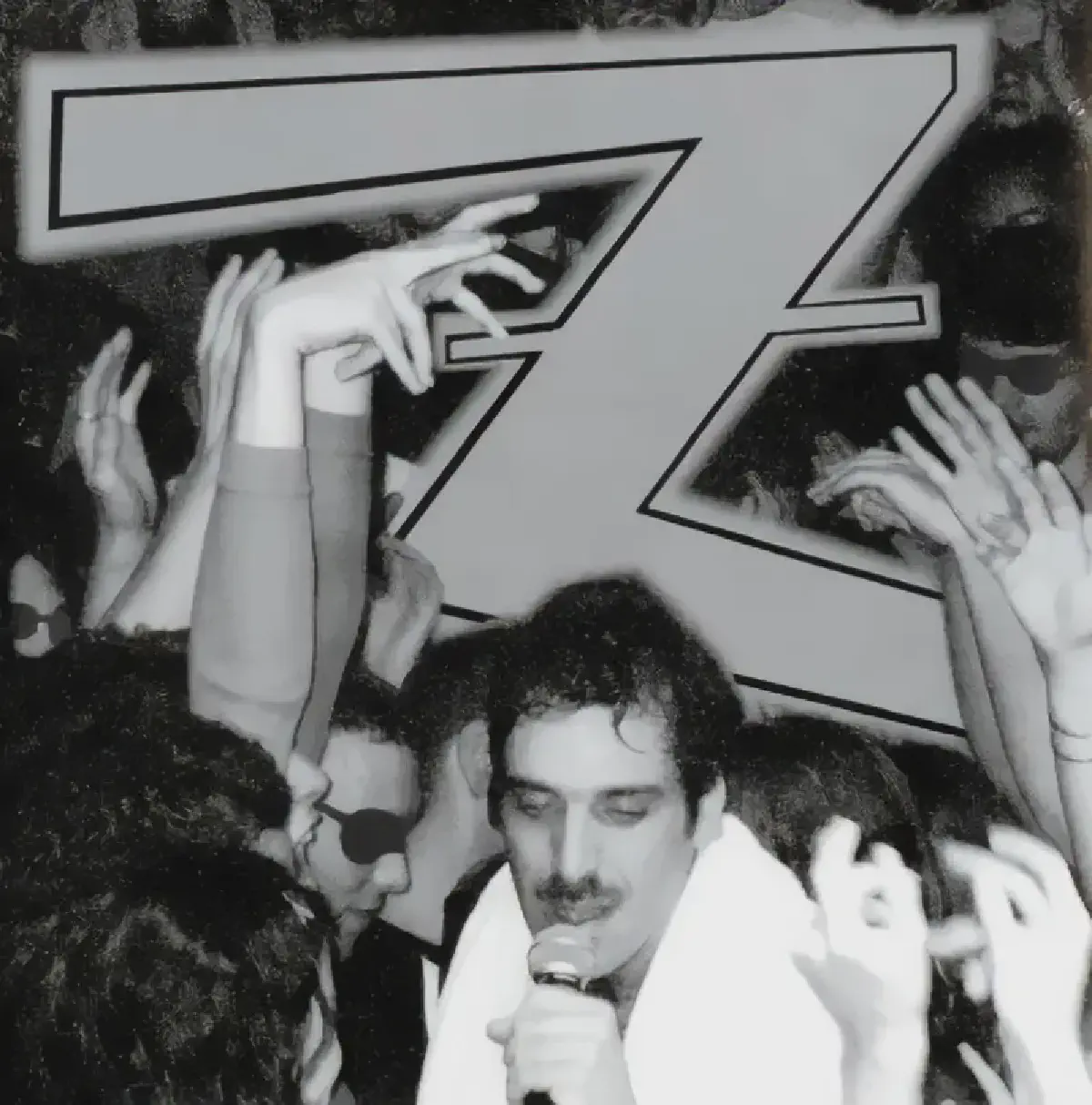
Having a photo of Gonzales on an album cover is a rare phenomenon. The 1999 “Real MC” original Gonzales EP features Gonzales adorned in a velour warm-up tracksuit turned away from the camera and snapping a finger. On the cover of the previously mentioned “Z”, we see a moustached Gonzales in black and white, but he’s otherwise occupied, surrounded by a crowd of people - his gaze averted to an off-camera point of interest.
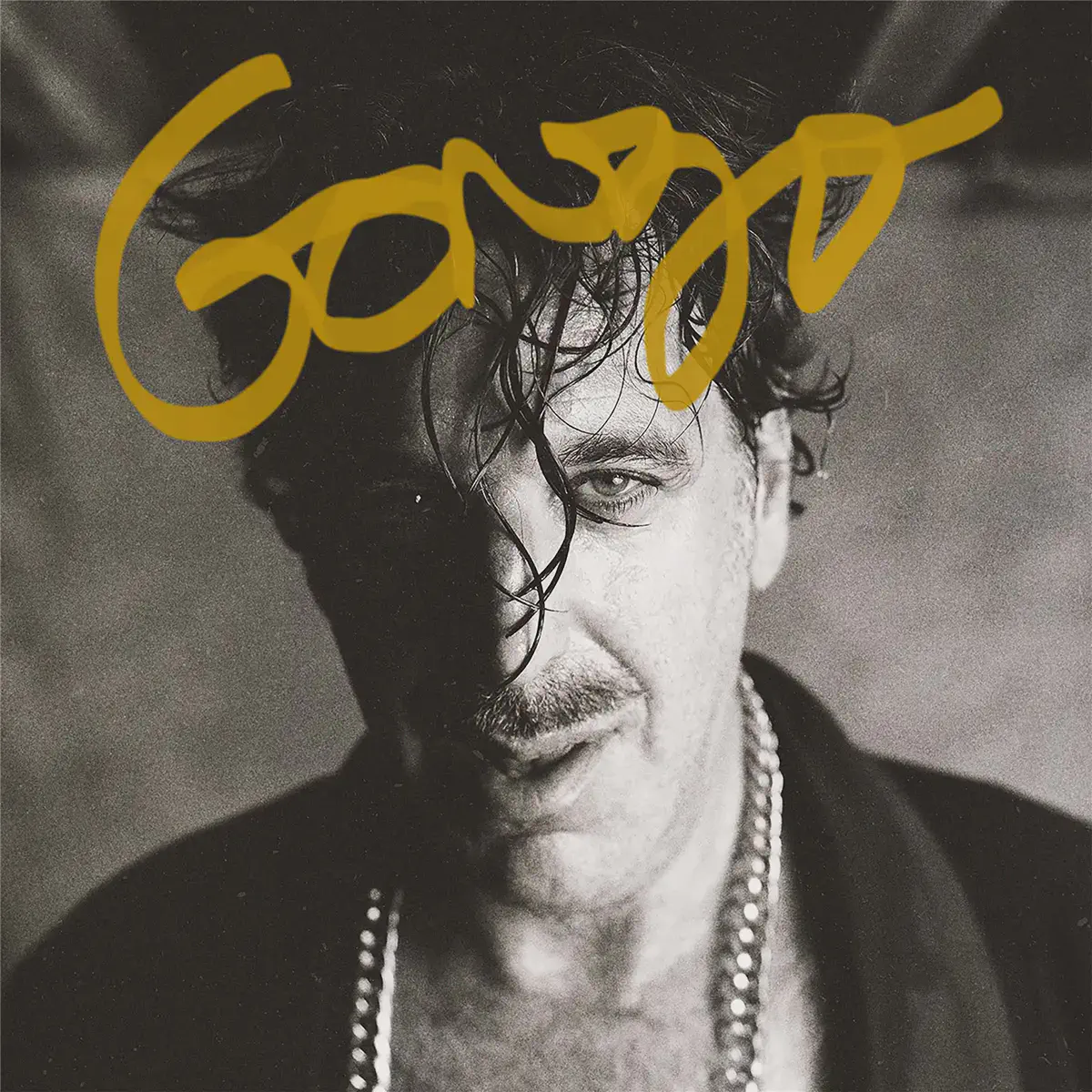
The cover of “Gonzo” features Gonzales up-close, unfiltered, possibly right after a performance, but with minimal touch-ups, makeup or other filters. It’s almost as if his photo has been snapped between rounds in a boxing match. Gonzales is directly staring into the camera with steely eye contact, as if he’s saying, “this is me”. The lighting is harsh and dramatic with a strong contrast between light and shadow, emphasizing Gonzales’ facial features and emotions. We feel a sense of depth, vulnerability, and even a touch of darkness. It’s likely that this “up-close-and-personal” aspect is what Gonzales wanted to convey as a theme and precursor to the music. In a sea of tiny album icons, Gonzales’ compelling photo stands out, and it’s even more compelling as 12x12” album cover. Across the top of the photo is the album title - hand-signed in thick gold marker resulting in a deep contrast to the dark background. The gold conveys a sense of richness, but being hand-signed also imparts another aspect that the album is personal.
The photographer, Victor Picon, worked with Gonzales on his “Gonzaveratory” videos, and his style is in sharp contrast to the colourful, playful and warm emotion Alexandre Isard conveys. Mr. Picon’s online portfolio is a wonderful adventure through light and shadow, which may have caught Gonzales’ eye. The album jacket features a more ‘traditional’ photo of Gonzales seated at the piano by Alexandre Isard, keys aglow and lighting up Gonzales’ features. He is staring down into the keys, not unlike the pose he assumes a few seconds before he starts into a concert. The glowing keys seem almost spiritual or holy, imparting a sense of mystery, divinity or inspiration.
On the flip side of the jacket, we find Gonzales plaintively gazing into a mirror and ensuring his hair is combed just so - likely preparing for a performance. The mirror an apt metaphor for an album filled with honest self-reflection as Gonzales seeks to impart how he really feels in his lyrics. Regarding honesty, in an interview with Red Bull Music Academy, he states that:
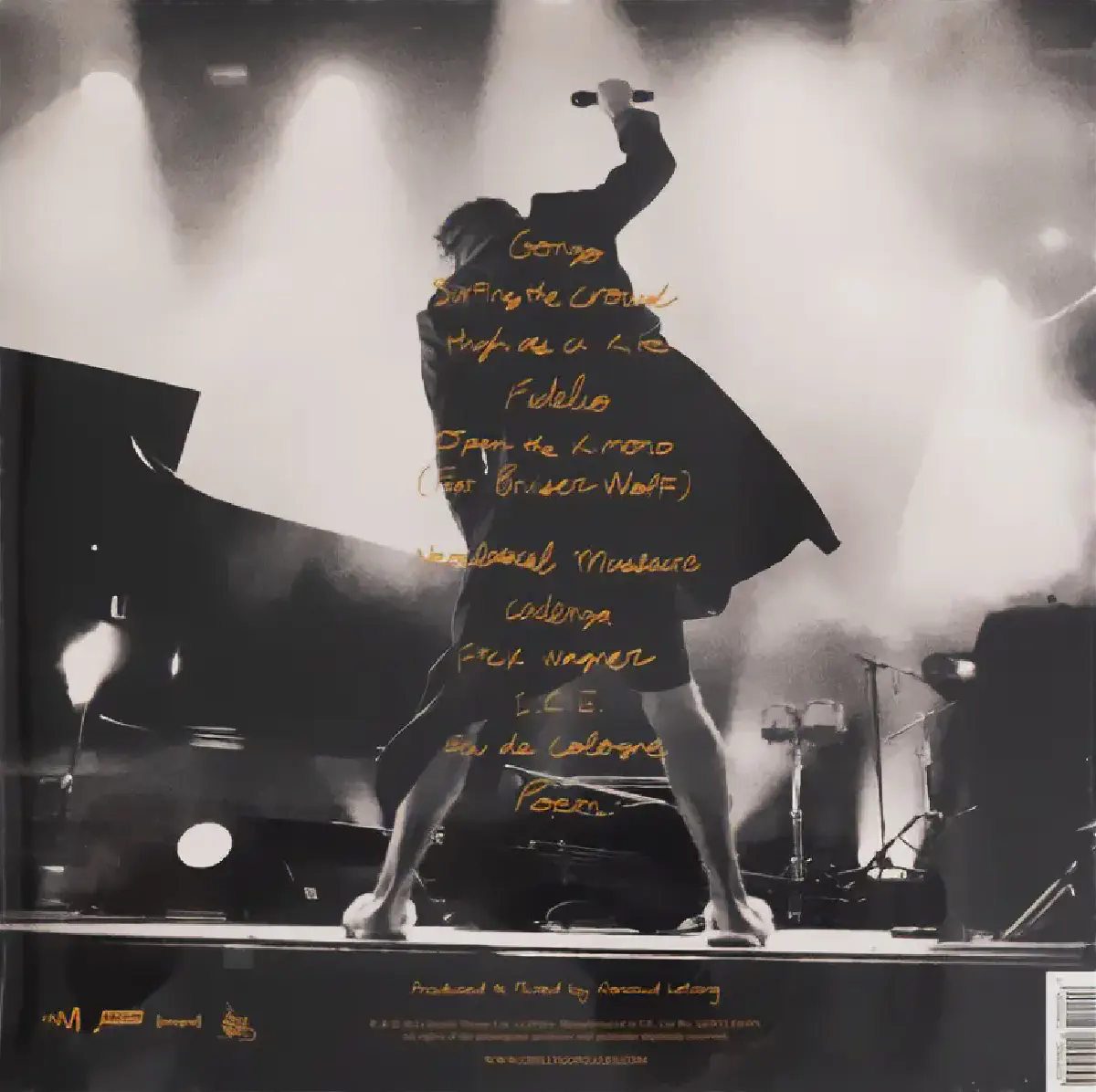
The back cover of the album sleeve features a concert photo looking up at the stage. Gonzales has his hand raised in triumph with his back to the audience, backlit by the hazy glow of stage lights that form an aura of sorts around him. If a beautiful photo reminiscent of the end of a Gonzales concert, which always leaves you wanting more.
The four photographs in succession form a sort of story. The cover representing the up-close and personal nature of “Gonzo”, which prepares us (and possibly himself) for the journey to come. The jacket photos impart preparing for a concert, followed by the melancholy and warmth with which Gonzales can impart his message and music, potentially helping himself and others navigate their way though hardships. On the back cover we see a Gonzales imparting celebration of achievement, confirmation of life and a path forward.
In addition to the sleeve and jacket photos, there is also a single page insert featuring a detailed and fantastical image. Although untitled, the sense is that the image is a visual representation of “Poem” – the last song on the album, through the lens of an AI art generator such as Stable Diffusion. It’s worthwhile examining the illustration further in conjunction with a closer look at “Poem” later on.
Gleaning Gonzo
On the flip side of the insert, we find several columns of text that form a short story by the famous Swiss author Christian Kracht. The story is set in Maine in 1957 and is told from the point of view of a European visitor (signed Christian Kracht) looking to have a meeting with his friend Gonzales. Through a series of events, the visitor appears to be unable to reach Gonzales, eventually succumbing to the notion that he may have narrowly missed his opportunity.
In keeping with the “Gonzo” theme, the story is likely allegorical and told from Gonzales’ point of view. There’s an underlying element of self-actualization throughout the story – realization that current paths may be isolating and lead Gonzales’ away from his goals or true calling, and the events in the story parallel events in real life as Gonzales confronts aspects of his personality that may be steering him away from his target state of enlightenment or self-awareness.
We certainly wouldn’t want to give any spoilers or otherwise bias readers’ opinions, but there’s almost an underlying religious aspect – something along the lines of embracing his true self and seeking others who ultimately have his best interests at heart (something likely difficult to achieve in an entertainment industry). Another theme that appears is the idea that, “In order to find yourself, you need to stop looking”, “The law of attraction" or “the power of now.” When you let go of desire and instead allow it to appear, that’s when you’ll find it. It’s generally about being and open to what life offers, rather than purposefully looking for something specific.

Early on, references to “Walden” (as in Thoreau’s Walden) and the “Ganges” imply a sense of spirituality and cleansing that foreshadows an eventual struggle and, ultimately, enlightenment for the central character. Throughout the story, the protagonist attempts to reach his friend Gonzales by phone, only to find that each phone he encounters is otherwise unavailable.
From our point of view, the story represents Gonzales searching for Gonzales for many years, and may be as a result of therapeutic sessions, the support and influence of others, and life events. Gonzales has also mentioned the teacher and philosopher Gurdjieff in past interviews, and Gonzales longtime friend Mocky has also expressed interest in the teaching of Gurdjieff (along with Kate Bush and many others). The “higher self” and spiritual growth teachings of Gurdjieff also appear to be an underlying thematic component of the story. While the exact purpose of including the short story is unclear, it’s thought that the story elements serve to reinforce the music, and the concept of Gonzales searching for Gonzales will underscore our look at each song on “Gonzo”.
Tracks
“Z” was an examination of previously released songs if Gonzales retired - a “pre-tirement” party that asked the question, “How would the songs change and morph over time until Gonzales retired?” From a write-up at the time:
Peaches makes an appearance on the very first track, and Gonzales appears to have reconnected with his McGill schoolmate and “Son” bandmate David Szigeti a.k.a. Taylor Savvy. Mr. Savvy was very active post-Son touring with Feist (his former roommate) and Peaches, plus releasing two albums under the Taylor Savvy moniker.
As we mentioned earlier, in “Gonzo”, there’s also a retrospective of sorts - Gonzales appears to use fresh eyes and a fresh attitude to revisit his oeuvre. As we’ve come to expect, some of the songs have been “tested” on crowds in late 2023 (Gonzales may be using audience reactions to gauge which songs work and which need to be tweaked). With new enthusiasm for Gonzales’ signature sounds over the last 25 years or so, we examine each “Gonzo” track in further detail.
Table of Contents
1. Gonzo
Shrouded by the ‘essence’ of an earlier Gonzales sound (complete with long-time collaborator Peaches on vocals), the eponymous and third person “Gonzo” seems to vacillate between mourning the end of the artist Gonzales and celebrating the (re)emergence of the entertainer “Gonzo”, or “Chilly Gonzo”, who will guide us through the rest of the album. Melancholy strings open and support both mournful verses where there’s an almost wistful lyrical quality. In the opening verse, Gonzales recalls a precipitating event that created a persona who would have the power to entertain like no one else. The second melancholy section is reminiscent of an almost Faustian deal – yes, the persona brought fame and fortune, but the underlying question appears to be, “Is it just the persona who is enjoying fame and fortune?”, not unlike the nose in Gogol’s famous story. This is in sharp contrast to the bombastic “Chilly Gonzales” announcement at the end of “Chilly in F Minor” from Uber Alles (Gonzales’ first full-length album). Oh, and the audience cheers in Gonzo harken back to the call-and-response in “So-called Party over there”; Gang - you with me? Yeah!
Ultimately, the melancholy is fleeting and represents a brief introspective glance back, since the rest of the track contains humorous and occasionally self-deprecating braggadocio and repetition that encourages people to remember the name “Gonzo” through call-and-response, sing-alongs, a slight stuttered G-G-Gonzo and even a spelled-out G-O-N-Z-O. There’s definitely an overarching notion of establishing Gonzo as Gonzales’ rap persona (as he hinted at in interviews). Vocals are dead-centre with minimal reverb for the most part, and double- and triple-up, harmonize and widen for emphasized sections, plus Peaches’ vocals are smooth and silky – unchanged in sound after 25 years, whereas Gonzales’ vocals have a more bassy and mature sound that have moved a semitone or two down from early albums. The vocal processing reinforces the core “I’m here” message, as does the mix of humour and social commentary. For example, the line “All eyes on me – Gestapo” conflates a performer being watched and scrutinized on stage with the Nazi Party’s secret police, which monitored (and tortured and executed) people to suppress opposition and dissent.
Musically, ‘Gonzo’ is purposefully sparse, focusing attention on lyrics as opposed to music, but (of course) the music has purpose besides a providing a metre. The syllabic rhyme of “Gonzo” and “Bongo” (and a multitude of other words ending in “o”) clearly works from literal and musical perspectives, and bongos have been a staple of Gonzales for many years. The musical core of the song is indeed fixated on bongo” in what appears to be a triple-entendre: bongos forming the beat, evoking a sense of passion, emotional release or drive, plus the euphemistic “bangin’” on the bongos. For some sections, the bongos had an interesting rapid “bounce” decay that further emphasizes lyrical content. Besides bongos, soft bass follows the vocals, ending with a much funkier bass for the last couple of measures – all likely courtesy of Taylor Savvy. There’s a three-note double-hit synth that works effectively to add an additional element of up-and-down movement without being distracting or overly powerful. A light digitized shaker makes a brief appearance as well heightening the tension slightly, but it’s striking dissonant piano “hits” where “joy meets pain” and “balls meet brains”, serving to remind listeners that Gonzo is a master or combining science and art for maximum effectiveness.
The very last line is telling, “on with the goddamn show” appears on the surface to emphasize that Gonzo is resigned to a fate of unwilling entertainment, but from another perspective, can be seen in a much more positive and inspirational light. The line works as a rallying cry of, “let’s do this”, with a nod to how difficult the task at hand can be – it’s not defeatist, but rather optimistic and motivating. Gonzales is reinforcing the line to himself, but also to listeners to seize and capitalize on challenges that others shirk and shy away from – it’s “showtime”.
2. Surfing the crowd
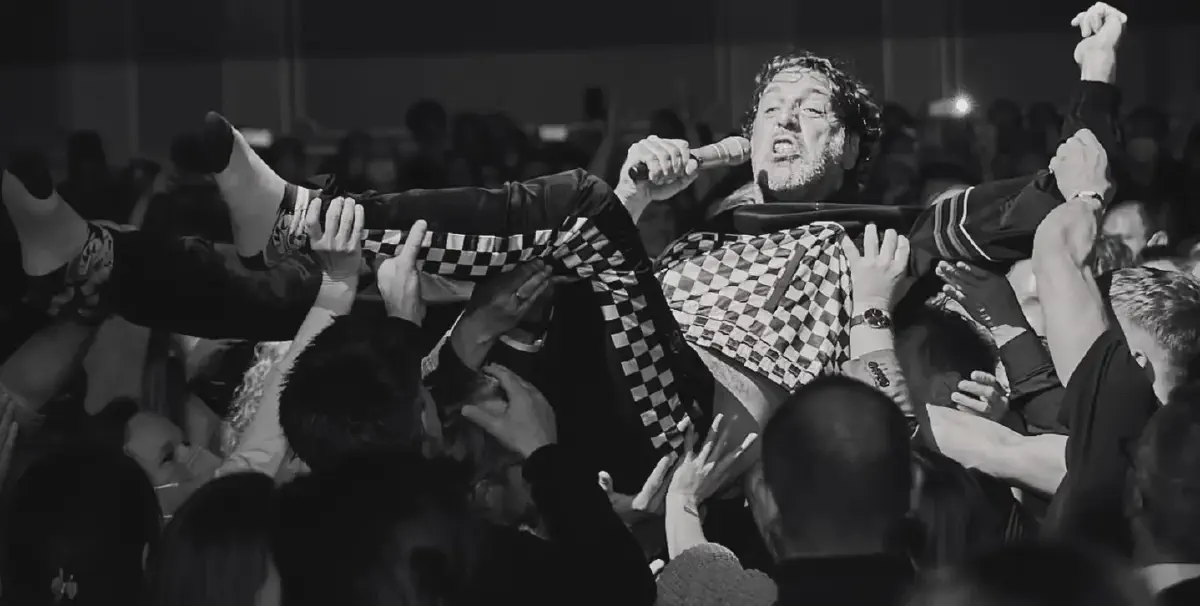
From a gospel-like piano introduction to its driving hi-hat and fuzz guitar, Surfing the Crowd seems to represent the middle of an initial triumvirate of songs that forms the crux of Gonzo’s personal transformation and retrospective look back. What could have musically been a track from Gonzales’ misunderstood masterpiece, “Soft Power”, Surfing the Crowd beautifully interweaves crowd surfing with an epiphany of religious proportions. Catchy and humorous lyrics drive deep into an examination of who we are, what defines us (or what do we allow to define us), and how to take control and be the person who you want to be while still retaining your fundamental nature.
Musically, the majority of the song has a wonderful forward momentum, care of an open hi-hat that is struck just as the reverberations from the prior strike are beginning to face. This adds an element of tension offset somewhat by a driving guitar playing a supporting melody. The combination provides an emotional intensity that not only keeps Gonzales moving forward on the hands of the audience, but seems to support an inner drive to complete his emotional/spiritual journey. Aside from the brief intro, there are three other sections where the driving rhythm succumbs to subdued strings, solo piano and bass. These quiet sections highlight critical changes in the story, the first with a short history lesson, the second with a precipitating event, and finally, the calm and wistful “hug” at the end of the track. The contrast between driving and quiet is wonderfully effective at ensuring people pay particular attention to key moments.
Lyrically, Gonzales is at top form, and in publicly exploring the process he’s been through with ’10 years of psychotherapy’, there are many messages that we can apply to our own lives. The chorus could be literally taken as act of surfing the crowd, which Gonzales is known for, but more metaphorically, it can represent rolling with the ups and downs of life on a collective consciousness, powered by collective energy, while supported by family and friends who help him stay aloft and free. A bird in the sky is the ultimate allegory for seeing life from a higher perspective, in Gonzales’ case, it appears that he’s undergone a spiritual growth of self-discovery, which was made possible when he had love and support. We all seek a liberating freedom from which we can grow and positively influence others, but like Gonzales, our past often hold us back. Like the short story included with the album, sometimes we can only discover ourselves when we stop looking. The repetitive “surf, surf, surf” and “bird bird bird” also drive a sense of fluidity beyond the music and add to the sense of movement.
The lyrics also delve into some of the darker parts of celebrity – ones which actors likely know all too well. Gonzales’ emotional music drives familiarity with an on-stage persons, much in the same way that stage actors become ‘relatable’ to their audience. There is a person under the persona, and in Gonzales’ case, he may have lost too much of himself through his love and respect for the audience. Lines such as, “But I’m not your celebrity”, and “Oh, you want a selfie? I don’t think it’s healthy” expose the inadvertent selfishness of others who feel that Gonzales is approachable for a selfie to post and brag about – in other words, they’re thinking of their own needs as opposed to being as respectful as they would to any other effective stranger. It’s possible that ancient tribes had a point when they thought that cameras stole a piece of your soul. In Gonzales’ case (or any modern celebrity for that matter), they may be giving up a piece of themselves with the sheer number of daily ‘selfie’ requests, and while it’s great to support fans, it can take its toll. From these verses, it’s somewhat apparent that if Gonzales was “his own worst enemy”, then maybe leveraging the power of his audience as a whole can provide the answers he’s searching for.
The line, “This is beyond music – this is air guitar” is brilliant and multifaceted. Like many, there’s little doubt that Gonzales mimed guitar in front of a mirror in his youth, but beyond the physical act lies deeper truths. “Beyond music” means connecting with the audience on a deeper level, and traditionally for Gonzales, this has meant emotionally (laughter, tears, joy, melancholy), but he’s looking for the next level of connection – something metaphysical that transcends our emotions and moves into self-expression – leverage the power of music and join Gonzales in becoming the person you want to be – to discover new levels of freedom. In terms of crowd surfing as a whole, the crowd itself becomes an instrument – and active entity that can participate in the musical experience, which may be closer to a religious experience than solely a fantastic concert.
During the second downtempo section, there’s an undefined pronoun “it” in the line, “It was unexpected, so I let it be”. The mysterious “it” could have been a new experience or feeling that Gonzales felt was worthwhile following. This apparently led up to a new way of looking at the world, with a “Tree of Life” of sorts in his purview for the first time. “Blowing through the leaves of a tree I’ve never seen” is evocative of spirit and wonder, of having the profound realization that there’s another way to approach life that can bring even more joy through positive messages and a deeper understanding of their identify and performance.
In what may be a nod towards the last song “Poem”, the lyric, “And time is a flat circle, and it looks like a pizza, so I want extra cheese” hints at a circular notion of time, or the ancient Greek “eternal return” theory. In the theory, everything that’s happened before will happen again in a vast and interconnected universe. Gonzales is comparing time to a pizza; his request for extra cheese amounts to a desire to become more “indulgent” in the moment – to strive for more joy and satisfaction from life, regardless of his past, and especially regardless of the central tenant of the theory that the future is set, which means that either Gonzales is predestined to ask for “extra cheese”, or he’s poking fun at the very nature of a set future.
Just before the chorus is repeated for the last time, Gonzales confidently states, “this is the end of the song, not the end of me”, further enshrining the notion that his persona and music do not define who he is as a person; when the song ends, he still has plans, hopes, desires. On a more philosophical level the line is evocative of the very nature of existence – do we exist after our “song ends” is a musical way of asking age-old questions. From the rest of the lyrics, Gonzales may not be sure, but he’s making the most of his current and future self, which from a spiritual perspective, will make him well-prepared for whatever comes next.
Following the final chorus, the driving “life” of the song morphs into a softer and peaceful sound with sourdine piano, strings and bass gently floating listeners off to another world. The driving force is done and we’re able to enjoy the beauty of our efforts. For us, Gonzales’ struggle, therapy and newfound insights can be inspirational to our own lives. Be choosy as to what and who monopolizes your time, support and be loyal people who are close and provide support and loyalty in return, and always keep an eye on the bigger picture. It’s an absolute gem of a composition musically and lyrically – certainly one of Gonzales’ most poignant and insightful tracks.
Gonzales appears to relish thinking of questions where the answers are another question. In a 2010 solo piano performance, Gonzales said to the audience, “In my brain, I was like, ‘How long do I play this waltz for?’. That was the question in my mind. But like many questions, the answer is just another question. What do you prefer from Gonzales – do you prefer it when I rap, or do you prefer it when I play piano pieces?” In Surfing the Crowd, the answer to the question, “So was it all a dream?” just evokes more questions.
3. High as a Kite
On an album filled with extraordinary compositions, it’s difficult to say that one stand out, but “High as a Kite” falls into the “instant Gonzales classic” category. The combination of deeply clever and introspective lyrics with airy and sparse instrumentation creates a wonderful opportunity for listeners to use Gonzales’ experiences as a springboard for examining elements of their own lives. As tempting as it is to undertake a line-by-line analysis of Gonzales’ brilliant and multi-faceted lyrics, focusing on key concepts and phrases will help to demonstrate brilliance of “High as a Kite”. Musically, one has a general sense of floating on air as gentle synth chords dab the landscape like an impressionistic painting. There’s also deep and somewhat foreboding bass notes care of Gonzales’ piano, combined with gentle and spiraling descending notes and melancholic humming – very reminiscent of something conceptualized on “Soft Power”. This musical tension and release is a masterful touch, adding another layer of depth and reinforcing the contrast between euphoric highs and crushing lows. There’s also a metronomic sound that ticks away the moments carrying a sense of the passage of time. Overall, the music in “High as a Kite” serves to reinforce and support the lyrical content, as opposed to a deeper interplay between lyrics and music.
Interpreting and deciphering the lyrical content in “High as a Kite” is akin to reading a great novel – pure pleasure that works on many levels. The opening stanza immediately sets the tone – the central character has blocked out the world and is living in self-imposed exile (albeit in relative luxury). The reference to virtual Venetian blinds works two ways: not only can the person control how much “light” they let in, outside observers are prevented from seeing inside the true feelings of the person. This could also be a reference to Solo Piano II’s gentle and adventurous composition “Venetian Blinds”, which feels like an exploration through dreamy half-closed eyes or through the narrow slits of almost-closed blinds.
Of course, one can’t ignore the obvious “high” double or triple entendre, but focusing on a state of euphoria may be the safest bet. Kites are generally tethered and can be reeled in or come crashing down, and the metaphorical “long way down to reality” acknowledges that the character is cognisant of this risk; a fall from grace isn’t without pain (“Ouch!”). Sourdine piano and the sound of a struck match lead into a disembodied segment where an echoic Gonzales somewhat rhetorically asks, “Are you there?” and “Can you hear — me?” When Gonzales says. “me” the echo is removed, and the vocal is very dry. It’s almost as if the character is seeking out another version of themselves – someone who is at peace and doesn’t necessarily need to shut the world out.
The next stanza is somewhat introspective. “Feasting when I should be fasting” could be a reference to the character indulging in worldly pleasures as opposed to focusing on their spiritual growth, and “My fame needs a famine” may reinforce the notion that it’s time to focus on something deeper. Being “non-plussed” implies a general felling of numbness, and “make me a minus” is a fantastic interplay with plussed, while also implying that being free means escaping from the character’s own thoughts. The central lyrics end on a very poignant question and answer, “Can I accept Ego death? Who me? Not yet.” This seems to reflect the overall lyrical tension in the composition – a struggle between the need for transformation, but also a desire to maintain their current identity and way of life, which appears to have won out in the end.
The struggle between “artist vs. entertainer” has been a constant throughout Gonzales’ musical career. Pure artistry or pure entertainment both seem less compelling without the push-pull in-between. In “High as a Kite”, the overall sense is that the struggle has shifted slightly to explore the tension between “person and persona”, which includes elements of being in a state of euphoria vs. facing reality. While most of us don’t struggle with the pull to be an entertainer, many seek a refuge from reality and indulge in guilty pleasures as a way to cope with stress and the need to perform to varying degrees. Gonzales’ exploration of this pull and interplay between states can help us better understand why we sometimes create cages for ourselves and shut off the outside world and better answer Gonzales’s question, “Can you hear — me?”
4. Fidelio
With a single-word title, Gonzales sets the stage for a masterful triple-entendre. “Fidelio” operates on three distinct levels: a nod to Beethoven’s only opera, a literal introduction of the “fiddle” to the arrangement, and a meditation on “fidelity”—specifically, Gonzo’s faithfulness to his own musical past. But perhaps the truest key to understanding this track lies in Beethoven’s own reflection on his opera Fidelio: “It is the work that brought me the most sorrow, for that reason it is the one most dear to me.”
“Fidelio” strips away Gonzales’ lyricism, offering a piece of aching, pop-infused romanticism. The track opens with a direct nod to Chambers. A rhythmic, cello-first see-saw establishes the pulse—a grounded, laborious back-and-forth that feels almost like hewing a tree. Over this, Gonzales introduces a wandering, introspective melody that a few “eagle-eared” fans will recognize as a subtly nod to his past: a thematic element from his soundtrack for the 2013 film The Piano Room. Here is “fidelity” in action - Gonzo sampling and reflecting his younger self.
As the piece develops, Gonzales lays down a series of lush, rolled chords, pushing the melody into a sweeping dramatic adventure. But the structure cannot hold. The tension breaks into a breathtaking, vertigo-inducing piano descent. When the dust settles, the piece radically shifts weight: heavy, thunderous bass strikes land on the keyboard, alternating strictly in time with the hewing cello. From this deep, existential weight, the track rockets upward into a kinetic, agitated climax. Strings attack with fierce, biting tremolos, backed by rapid-fire piano arpeggios that warp the pristine chamber setting into something desperate and anxious.
As quickly as the storm gathers, the fever breaks. What follows is a gorgeous, piano-forward descent down the keys, culminating in a single, deeply resonant low note. Struck and held with a masterful half-pedal, the overtones are allowed to bleed and decay naturally into the wood of the piano. In the quiet aftermath of that resonance, Gonzales offers a gentle, solitary melodic sequence, fading out into the silence. It is a stunning, sorrowful, and deeply dear piece of music; a reminder that beneath the Gonzales’ sometimes brash exterior lies one of the best modern composers.
5. Open the Kimono
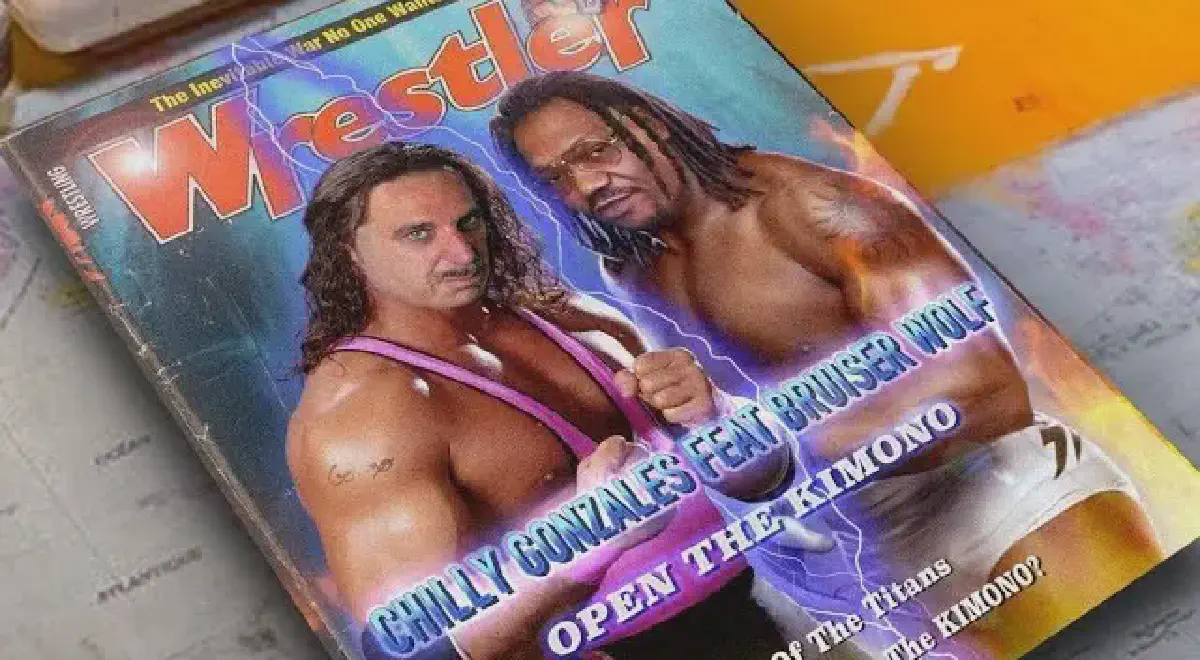
If Gonzo is an album defined by a decade of psychoanalysis, then “Open the Kimono” is the final session—the moment where the couch is vacated, the bill is paid, and the door is left wide open.
“Open the Kimono” as a metaphor is apt for Gonzales as he’s traditionally been very open to share his feelings, thoughts, or desires; especially in his music, but also in online “lessons” and interviews. Musically, the track feels like a homecoming to the early 2000s; the high, held synth and soft, flute-like textures evoke the taunting, subversive energy of Über Alles. This isn’t just nostalgia, however; it’s a deliberate re-engagement with the “spirit” of the younger Gonzales, now filtered through a more sophisticated lens.
As the song progresses, a witty, honky-tonk piano begins to dance around the lyrics, escalating in tone and intensity - possibly indiciative of the sound of the Entertainer and the Artist duking it out and finally harmonizing. The lyrics are visceral, describing a man who is “half a vampire” screaming into his pillow—a “monster” kept behind the silk of the kimono. There is a sense of impending consequence: “one of us might not make it through the night.”

Perhaps the most brilliant “Gonzo” move on the track is the guest verse by Bruiser Wolf. Curiously, Bruiser seems to act as a psychological surrogate for Gonzales himself. He raps about a “fear of rejection” and “desolate beginnings”—experiences that belong to the Montréal-to-Paris trajectory of Gonzales, yet delivered through a different voice. It is a masterful use of a mirror; by having someone else speak his truths, Gonzales validates the “Gonzo” experience as something universal rather than purely egocentric. The line “I don’t regret shit—everything was a lesson” serves as the definitive mission statement for the entire album’s retrospective journey.
The bridge brings the metaphor to its literal conclusion: “The belt falls like a feather to the floor.” The performance is over. The artifice has been dropped. As the chorus stretches the final syllable into a lingering “kimonahh,” the tension that has been building since the album’s first note finally finds its resolution.
The track concludes with a spirited piano solo characterized by heavy resonance and long, natural decay. As the notes fade into silence, it’s still unclear if there’s a clear winner in the artist vs. entertainer struggle, but as the wrestling-driven video implies, Gonzales aim may be to perfect his artistry and transform it into an entertaining spectacle.
6. Neoclassical Massacre
Not-so-hidden in the song is one long insult used effectively to arouse emotions, assert dominance have a good laugh at the expense of the group being insulted (especially with Gonzales at the musical and lyrical helm). Just as music can bring us together socially, an insult can rally around a particular theme that shames the other party - hopefully into a retort, bettering themselves, ceding defeat, or taking up the challenge and producing even more vapid arpeggiated music that even more people listen to (or at least stream).
The question arises of whether or not all good music must insult our senses to one degree or another to truly be memorable - insult in that case is a deviation from what’s expected from listeners - the unexpected note or phrase. When you hear Mushaboom echoing soullessly in the IKEA warehouse (it really happens), does that insult the talent, skill and dedication from the team, or is that a celebration of how pervasive great music can be? An insult is only insulting based on perception - at 2 billion streams and 100M+ per day, Einaudi would be hard-pressed to be insulted - even if a large majority were algorithms. Venting, grievance, righting a wrong, or just having fun? Mozart writing “Leck mich im Arsh” as a bit of a good-natured ribbing of friend Joseph Leutgeb.
Perhaps the goal is education, or an outlet - or a combination thereof. Name and shame - but instead of a person, an entire genre. Gonzales expressing distain for piano performers who have apparently exhausted their talents to this point and have to move to more extremes measure, such as plucking strings, prepared piano and possibly even playing the piano with oranges, as a sign of their “superior virtuosity”.

‘Maybe as a wake-up call to people who readily accept their oppressors - in this case the algorithmic and AI-driven claptrap that recommends Einaudi right after someone listens to Gonzales. It can cheapen his compositions. Gonzales must be aware of the risks with calling out neoclassical composers - some people who have never heard of Einaudi will actively listen to his music and determine that “it’s not so bad” (it is), like Nickelback, a diss draws attention to things and keeps them alive. The algorithm tries to feel personal, but just like AI in general, it’s a parlour trick – millions upon millions of streams tell stream services that the “next best song” after Gonzales is a vapid piece of piano music, which then becomes a self-reinforcing cycle that’s difficult to break free from.

In other ways “Neoclassical Massacre” allows Gonzales to take on the role of the two old Muppet curmudgeons Waldorf and Statler – poking fun a bit of arpeggiated crap, then casually insulting the genre and artists. By embracing the essence of the Muppet critics, Gonzales can poke fun at the genre he’s been grouped into and assume the role of a cynical and devoted insider, while also helping to prevent the entire Neoclassical genre from taking itself too seriously. Far from killing the genre, Gonzales’ constructive criticism and passion can actually help save it from itself.
7. Cadenza
Positioned as a brief, shimmering pivot point, “Cadenza” serves a purpose that is as much functional as it is aesthetic. By definition, a cadenza is a moment of suspension—a parenthetical flourish where the formal structure of a piece takes a backseat to the soloists’ virtuosity. In the context of an album that is self-consciously “Gonzo,” this track feels like the Maestro stepping out of the “rapper” persona for a moment of pure, unadulterated musicality.
Its placement is strategic, acting as a vital sonic palette cleanser. After the intellectual and stylistic violence of “Neoclassical Massacre,” the listener’s ears require a reset. Not to make people who remember this feel old, but if you ever took the “Pepsi Challenge”, they served a cracker in-between tastes as a paeltte cleanser. “Cadenza” clears the aural “palette”, allowing the remnants of the “Massacre” to fade so that the impending weight of “Wagner” can be properly felt.
This shift from “Neoclassical Massacre” to “Wagner” could easily be construed as a journey from “dark to dark”—a descent from deconstruction into heavy, historical shadow. Without “Cadenza,” the transition might feel suffocating. Instead, Gonzales provides a moment of weightlessness. It is a brief flash of light that prevents the album’s narrative from becoming too dense, ensuring that when the “Wagnerian” tension eventually arrives, it hits with the intended impact rather than being lost in a continuous blur of intensity. Within the larger fractal of the album, this is the “breath” before the final movement—a technical reset that proves even a virtuoso knows when to stop talking and let the notes act as a bridge.
8. F**k Wagner
If “Cadenza” was the palate cleanser, then *“F*k Wagner” is the high-stakes main course—a complex, bitter, and ultimately self-reflective dish that serves as the album’s ideological climax. While the title suggests a standard-issue diss track, the composition operates on multiple levels, evolving from a historical grievance into a profound interrogation of the modern soul.
Sonically, the track is a spiritual successor to The Unspeakable Chilly Gonzales. The orchestral elements provide a cinematic weight that mirrors the “Wagnerian” grandiosity it seeks to dismantle. But where Claude Debussy once mocked Wagner with a subtle, satirical wink—quoting the Tristan chord in “Golliwog’s Cakewalk” only to transform it into a jaunty ragtime joke—Gonzales opts for a far less tangential assault. By labeling Wagner a “monster” and “King Kong,” he acknowledges the composer’s gargantuan, almost inescapable influence on Western culture, while simultaneously trying to knock him off the Empire State Building of music history.
The lyrics hit a particularly poignant stride in Verse 4: “Fans can’t see clearly, that’s why it’s called fantasy / every criticism is blasphemy.” Here, Gonzales captures the terrifying gravity of modern culture and the “unblinking eyes of the cameras.” He suggests that in our digital age, the camera doesn’t just record reality; it exposes the artifice of the “fake martyrs” and “professional liars” who inhabit the media circus. The camera reveals truths that the “unblinking” public often chooses to ignore in favor of the comforting fantasy of the Artist as an idol.
The Great Pivot: “We Are All Richard”
However, the true “Gonzo” moment of radical, uncomfortable honesty arrives when the song turns its finger back toward the soloist. In an album born of a decade of psychoanalysis, it is perhaps inevitable that a song about a historical villain ends in a mirror.
The transition from “Fuck Richard Wagner” to “How about fuck Chilly?” is a masterful bit of narrative tension and release. It moves the track from “cheap and easy” media-circus posturing into a gut-wrenching admission of shared humanity. When Gonzales declares, “We’re all guilty—we are all Richard,” he is dismantling the high-horse of moral superiority. He suggests that the capacity to hate, to outcast, and to be a “monster” is not a Wagnerian anomaly, but a fundamental human defect driven by the same “primal social cues” that govern us all. By the time the final chorus hits, the “diss track” has been successfully re-contextualized. It is no longer just about a dead antisemite or the controversial trajectory of Kanye West; it is about the “artifice” of everyone involved; performer, audience, and cultural critics.
In the overarching fractal of the album, this song represents the peak of the tension. It is the moment where the “energy of twenty years ago” (the rapper) collides with the “newfound clarity” of the analyst. It forces the listener to grapple with the uncomfortable reality that while we can boycott the art we hate, we are often still dancing to the beat of our own internal monsters. It is a “Greatest Hit” for the modern age: a song that starts with a punch and ends with a confession, proving once again that in Gonzales’ world, the truth hurts—but it’s the only thing worth spitting.
9. I.C.E.
The lead single from “Gonzo”, I.C.E. is a play on Germany’s [formerly] efficient high-speed train (InterCity Express), and ice - a subject long used in rap to denote either an otherworldly coolness or diamonds/wealth. Promoted as a love letter to Germany, to an outsider, it definitely would appear to the in the same vein as “I am Europe” in that Gonzales is now familiar enough with Germans and Germany to not only show some love, but also good-natured ‘pokes’ such as those siblings give to one another - it’s all fun, but there’s also an underlying truth to the overall sentiment - case in point: the lyric, “I love you, but I’m a critic”.
The song itself and video deserve a deeper treatment as they’re both an excellent take on not only Germany, but the excesses of society in general. Jonathan Barre’s ‘art school’ video accompanying I.C.E. is chock-full of imagery (many the Midjourney-generated exterior scenes range from disturbing to dystopian) and metaphor which deepen and reinforce the song’s meaning within a colourful and humorous guise. In the greater ‘Gonzo’ package, I.C.E. thus far is an outlier of sorts; its unique first-person perspective focuses on German sentiment regional customs and clever phraseology vs. a straight-up “tell all”, although lines such a “my enemies drink chamomile tea, while I eat camel toe” are effective and humorous in German and English.
One interpretation of the video as opposed to the song is that the self-centred, elitist and heinous behaviour (including rising antisemitism) of many rappers (here, portrayed by Gonzales and his real-world wife) is sure to end badly for them. At one point, a porter (played by Gonzales’ Montréal friend Adam Traynor), allows ice cream to drip on the expensive leather jacket of Gonzales’ female companion. This may further reinforce the notion that rappers behaving this way will be ‘pooped’ on, representing an eventual loss of control.
Gonzales’ lyrics explore German wonders and contradictions which is somewhat reflected by the optimistic tone of the two train passengers, but as Barre’s dark imagery rolls by outside, one has the distinct impression that these two aren’t headed in the right direction. The Midjourney prompts can almost be reverse engineered: lake with abandoned cars, a grassy field of pretzels, fires in the spire of gothic churches, and finally Caspar David Friedrich’s classic painting, “Wanderer Above the Sea of Fog” – considered a landmark in self-reflection and contemplation, but posthumously, Friederich’s works were forever tainted when Hitler considered Friederich’s landscapes a forebearer to Nazi ideology (“Blood and Soil”). The couple are definitely headed in the wrong direction.
10. Eau de Cologne
If Gonzo is indeed a stealth “Greatest Hits” album, revisiting the distinct chapters of his musical life, then “Eau de Cologne” is undeniably Gonzales’s homage to his Parisian mid-2000s—the era defined by his brilliant, stripped-down production work with Feist.
The original 18th-century creator of Eau de Cologne famously wrote that his invention reminded him of “an Italian spring morning, of mountain daffodils and orange blossoms after the rain.” It is a scent designed to evoke freshness, purity, and a gentle cleansing. True to its namesake, Gonzales strips away the bombast here, offering a deeply contemplative, melancholic track that feels like a quiet washing away of the past, including a subtle nod to his adopted German home.
The piece opens with a gorgeous, softly repeating piano melody that feels intimately familiar. But the purity of the acoustic piano is quickly grounded by the introduction of a slightly distorted, digital synth-bass. This juxtaposition of pristine classical keys sitting atop a bed of subtle electronic grime is the exact sonic signature that defined his early pop collaborations. Floating above this foundation is a soft, breathy synthesizer that sounds remarkably like a wordless human voice. It hovers in the mix like the Feist, singing along in the empty room.
As the track breathes, Gonzales explores the extreme upper limits of his instrument. He holds high notes where the piano strings are pulled so incredibly taut that they cease to sound like vibrating wire, instead ringing out with the sharp, percussive purity of solid metal. These strikes blend seamlessly with the addition of soft bells, creating a shimmering, fragile canopy over the distorted bass below.
At barely three minutes long, the track is agonizingly brief. Yet, much like a fleeting scent caught on a spring breeze, “Eau de Cologne” leaves a lingering, melancholic undertone long after the final note decays. It is a stunningly beautiful distillation of the artist he was two decades ago, viewed through the calm, clear eyes of the man he is today.
11. Poem
If the preceding tracks on Gonzo are the sounds of an artist looking backward, re-contextualizing his past eras through the “Bach Trick,” then the album’s closer, “Poem,” is the sound of an artist finally breaking free of it all. It is a stunning, stream-of-consciousness finale that acts as both a musical climax and a psychological rebirth.
To understand the weight of “Poem,” one must understand Gonzales’s relationship with hip-hop. Historically, his rap persona (most notably on The Unspeakable Chilly Gonzales) was built entirely on a foundation of hyper-inflated ego, defensive braggadocio, and razor-sharp punchlines. But here, Gonzales attempts something radical: he removes the ego entirely - there is no “I am the greatest” here. Instead, he paints a subject-less labyrinth, a surreal, dreamy fresco where “anything can be, yet nothing really is.”
Sonically, Gonzales anchors this ego-less journey by recalling his Room 29 era (2017). The vocal delivery is intensely intimate, evocative of the hyper-close-up spoken word that mirrors Jarvis Cocker’s delivery. Mixed with incredible precision, the vocal track occupies a wide stereo image, carrying a deep, subterranean rumble that is only truly detectable on a proper hi-fi system or a good set of headphones. It feels as though he is whispering directly into your subconscious.
Lyrically and musically, the track is a relentless, accelerating build-up of ecstatic, supernatural imagery. Starting with “In the beginning / A bundle of joy,” Gonzales cascades through velvet volcanos, chocolate oceans, and giggling violins. The tension mounts perfectly in tandem with the music, driving toward an overwhelming, sensory peak. This climax walks a brilliant, ambiguous line between the physical and the spiritual. As the music reaches its zenith and the lyrics rush toward the “light at the end of the tunnel,” the track channels the breathless, orgasmic release of Frankie Goes to Hollywood’s “Relax,” fused equally with the existential, triumphant arrival of Morrissey’s “At Last I Am Born.”
Then, the release. A climactic note strikes, followed by a sudden, breathtakingly long break. The musical architecture collapses, leaving a lingering spasm where all that remains in the fathomless space is the naked human voice. “Into a blond, beautiful sun / Oh God, here I come.” It is a literal and figurative rebirth. Having spent an entire album confronting the “funny, dark, and self-hating” lyrics of his youth, and having finally learned to “give himself a hug,” Gonzales uses “Poem” to shed his old skin completely. The album ends not with a punchline, but with a wide-open door, leaving the listener—and perhaps Gonzales himself—thrilled and entirely unsure of what he will do next.
New Beginnings
Many people will recall the ‘fractal’ craze of the 1990s; calendars, screensavers, framed art, and all manner of ‘fractal-based’ trinkets. Fractals are all around us, and are a common occurence in nature to express symmetry at different scales - trees, clouds, coastlines, and blood vessels exhibit fractal behaviour. Gonzales has often mentioned the importance of generally balancing tension and release within a composition to help create a musical journey, but similar to a fractal, the notion of “tension and release” can be applied to many levels of Gonzales’ trajectory: compositions, albums, ouvre, overall approach of art vs. entertainer have aspects of an underlying tension and release.
The Micro: The 10-Second Seesaw
At the most basic level, a single composition functions like a tiny engine; it requires the spark of tension (an unpredictable chord, a dissonant note, a lyrical jab) followed by the exhaust of release (a familiar resolution, a return to the melody). Gonzales knows exactly how far to push listeners into the unknown before pulling them back into a comforting embrace. It is the fundamental building block of his musical ‘adventures’; a heartbeat of constant, rhythmic friction.
The Narrative: The Album as a Setlist
This pattern then repeats at the next level: the album sequence. Gonzales has never been one to simply “dump” tracks into a collection. Whether it’s the curated chaos of The Entertainist or the calculated minimalism of Solo Piano, each album is a narrative arc designed with a specific flow (purportedly in consultation with Feist, who is apparently very good at track sequencing). The tracks are sequenced to build suspense, offer comic relief, and eventually provide a thematic resolution. On Gonzo, this sequencing feels particularly pointed; the tension of a decade’s worth of therapy sessions slowly gives way to the release of an artist who has finally found a way to hug his younger, rap-obsessed self.
The Macro: The Twenty-Year Overture
Zooming out to a 10,000-foot view, the entire twenty-year discography begins to look like one massive, decades-long composition. If 2003’s Z was the tension of a young artist pretending to retire before he’d even truly started, then Solo Piano was the quiet, introspective ‘middle’ that redefined his career. Gonzo acts as the triumphant resolution to this long-form melody. It is a retrospective that manages to be a fresh start, proving that the past isn’t a weight to be carried, but a theme to be re-arranged. The trajectory suggests that an artist can spend twenty years building tension only to find the most satisfying release in the act of being incredibly personal and honest.
The Meta: The Battle of the Bathrobe
At the very top of this fractal hierarchy sits the ultimate struggle: The Artist versus The Entertainer. This is the “creativity vs. commerce” tension that serves as the engine for the entire Gonzales persona.
The Tension: The Artist who wants to be subversive, provocatively deep, incredibly adept at melancholy that will make people cry, and perhaps a little bit difficult to work with.
The Release: The Entertainer who knows a good pun, a pink suit (or sublime robe), and a well-timed joke can make even the most complex existential crisis palatable to a crowd.
On Gonzo, these two forces stop fighting for a moment and start dancing. The “rapper” energy provides the provocative tension, while the “maestro” piano provides the melodic release. By embracing the humor of the situation, Gonzales disarms the audience’s defenses, making the heavy lifting of self-reflection feel less like a lecture and more like a shared joke.
The Masterclass: Playing Your Own “Bach Trick”
Gonzales has always loved to pull back the curtain on how music works, sharing insights and demystifying the magic of pop and classical composition. But with Gonzo, he is pulling back the curtain on something much larger: the mechanics of personal growth. So, what is the ultimate masterclass here? What can we, the listeners, glean from his journey?
The lesson lies in applying the “Bach Trick” to our own lives.
Just as Gonzales took the overarching “melody” of his career and moved it to a different part of the keyboard to see it with newfound clarity, we are invited to do the same with our own histories. We all have past eras and versions of ourselves we might look back on with embarrassment, regret, or the same “self-hatred” Gonzales admitted to harboring. We all have masks we’ve worn to survive in our careers or our social circles.
The instinct is often to reject that past, to bury it, or to pretend we were always the enlightened people we strive to be today. But Gonzales teaches us a different approach: you don’t have to erase your past to evolve.
The notes of your past are unchangeable; they are already written on the page. But the key in which you play them can change. You can look back at the arrogant, scared, or messy versions of yourself and choose to reinterpret them not with judgment, but with empathy. You can take the defining moments of your life and transpose them into a register of wisdom and acceptance.
Furthermore, Gonzales teaches us that tension is a necessary part of the human architecture. The stress of our daily lives, the friction of our relationships, the struggle to find our authentic selves, which is the dissonant chord holding the narrative together. But we cannot live indefinitely in the tension. We must actively seek the release.
Through Gonzo, Chilly Gonzales shares his most profound insight yet: the ultimate release of tension doesn’t come from achieving perfection, fame, or the perfect punchline. It comes from finally looking at the flawed, ridiculous, beautiful trajectory of your own life, making peace with the person you used to be, and (at long last) giving yourself a hug.